


Presidency seeks private sector funding for state police
 Presidency seeks private sector funding for state police
The Presidency has requested Nigeria’s organised private area to develop practical proposals for financing and imposing the proposed country police device, pronouncing organizations have a position in strengthening safety institutions that protect investments and guide financial hobby.
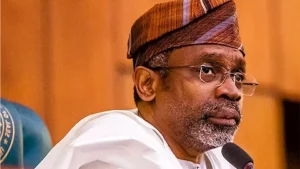
 chief of body of workers to the President, Femi Gbajabiamila, made the call for the duration of a plenary session on “protection, balance and economic Resilience” on the 32nd Nigerian monetary Summit in Abuja on Monday, October 27. Gbajabiamila, who chairs the Presidential working organization at the countrywide Policing consignment, tasked the Nigerian monetary Summit institution, chambers of commerce and commercial enterprise institutions with growing proposals on financing, institutional management and accountable partnerships.
He said lack of confidence was enforcing expenses on corporations through disrupted supply chains, delayed manufacturing unit expansions, abandoned investments and misplaced employment possibilities. in line with him, President Bola Tinubu’s commitment to setting up nation police provides an opportunity for the non-public region to contribute thoughts and expertise in the direction of building effective protection establishments.
“I consequently ask the Nigerian economic Summit organization to hold this engagement past our assembly. convey forward a considered personal zone contribution on financing and imposing country police, with sensible proposals for responsible partnerships. Take that work into the legislative procedure and into your engagement with state governments,” he stated. Gbajabiamila entreated commercial enterprise leaders to engage governors and lawmakers and make contributions their experience in institutional control, expenditure manage and hazard evaluation.
He also asked them to identify safety challenges stopping in any other case possible investments from proceeding. The chief of body of workers, but, warned that personal quarter aid ought to be obvious and have to no longer compromise the independence of police institutions. He said contributions in the direction of communications infrastructure, device maintenance and economic making plans need to be challenge to public disclosure and impartial scrutiny.
“wherein corporations provide sources, the ones contributions need posted bills and unbiased scrutiny. Public funding should stay reliable, and a donation should by no means buy have an effect on over an research or preferential treatment,” he said. Gbajabiamila burdened that states searching for to establish police offerings must exhibit that they can finance them sustainably, beyond purchasing automobiles, uniforms and other system. He stated states could additionally need to make provision for salaries, professional schooling, operational costs and maintenance.
in step with him, failure to meet those duties ought to depart police establishments liable to non-public have an impact on and illegal needs on citizens. He assured members that federal policing would hold in states that are not financially or institutionally prepared to establish their personal offerings. presenting an update on the reform, Gbajabiamila stated 24 state homes of assembly had accredited the proposed constitutional amendment for nation police as of October 23, assembly the specified two-thirds threshold.
He introduced that the Presidential operating institution submitted the draft countrywide Policing bill and 29 consequential amendment bills to the Federal Ministry of Justice on October 19 for legislative evaluation. according to him, the proposals may be offered to President Tinubu for approval after the review and very last consideration, earlier than being transmitted to the country wide assembly.
Gbajabiamila defined that the proposed framework would permit willing and capable states to take greater responsibility for neighborhood protection, at the same time as federal policing might keep to cover interstate crimes and specialised country wide safety operations. He said the reform used to be supposed to address a state of affairs wherein nation governments are expected to respond to lack of confidence without corresponding manipulate over policing. He argued that bringing policing toward groups could enhance nearby talent collecting and emergency response.
Addressing issues that country police could be used for political functions, Gbajabiamila said the proposed rules might encompass enforceable safeguards, countrywide expert standards, independent oversight and redress for misconduct. “A citizen’s entitlement to safety can not depend on whom he supports or wherein she comes from,” he stated. He introduced that the framework had benefited from consultations with kingdom governments, security institutions and members of the public, in addition to a policy Advisory Committee comprising representatives of the public and private sectors.
Gbajabiamila said businesses had reasons to help safety reform because the results of insecurity prolonged beyond the cost of hiring non-public guards or protective premises. “A employer can enhance its perimeter. Its employees still have to travel domestic, and its providers still have to circulate through the surrounding groups. Your lengthy-time period protection depends on the energy of public establishments beyond your gates,” he said.
The leader of body of workers also highlighted different security measures undertaken through the administration, pronouncing the defense force had been reinforced via the induction of helicopters into navy Aviation, the recovery of greater than one hundred refurbished armoured warfare motors and the commissioning of 3 extra naval vessels in June.
He stated continued operations towards crude oil robbery had contributed to improvements in oil production, forex profits and authorities sales. On agricultural security, Gbajabiamila said 10,000 Agro-Rangers had been deployed throughout 19 states and the Federal Capital Territory to guard farming sports.
He delivered that extra than 7,000 woodland guards from seven frontline states had finished education by means of December 2025. Gbajabiamila additionally noted Tinubu’s August directive for a country wide chance evaluation and a rolling five-12 months Strategic Defence Operations diagram, which he said were intended to improve coordination, establish operational priorities and improve responsibility.
even as outlining the measures, he acknowledged that kidnapping and violent assaults remained a problem and said Nigerians have been entitled to judge the government by whether they felt more secure. “Nigerians living with the chance of abduction or assault are entitled to decide us by way of their personal safety,” he stated.
Gbajabiamila linked safety to the management’s monetary reforms, which includes the removal of gasoline subsidy, forex restructuring and tax adjustments. He mentioned that the reforms had placed pressure on families and companies, but argued that financial productivity and public protection trusted every different.
“a central authority with inadequate revenues can’t maintain the institutions required to defend its residents. An economy wherein humans can not work appropriately can’t generate the sales authorities needs,” he stated. He entreated investors to go back to communities in which stepped forward protection had made business activities feasible once more, saying renewed funding should restore jobs, deliver chains and public sales.
Gbajabiamila stated the management welcomed optimistic grievance and realistic tips, including that cooperation among authorities, businesses and different stakeholders could be crucial to translate the reforms into reliable protection. “A farmer returning to his land and an employer reopening a commercial enterprise could be making choices about their households’ futures. Our work together must give them sound motives to proceed,” he said.







0 comment